 Sabatini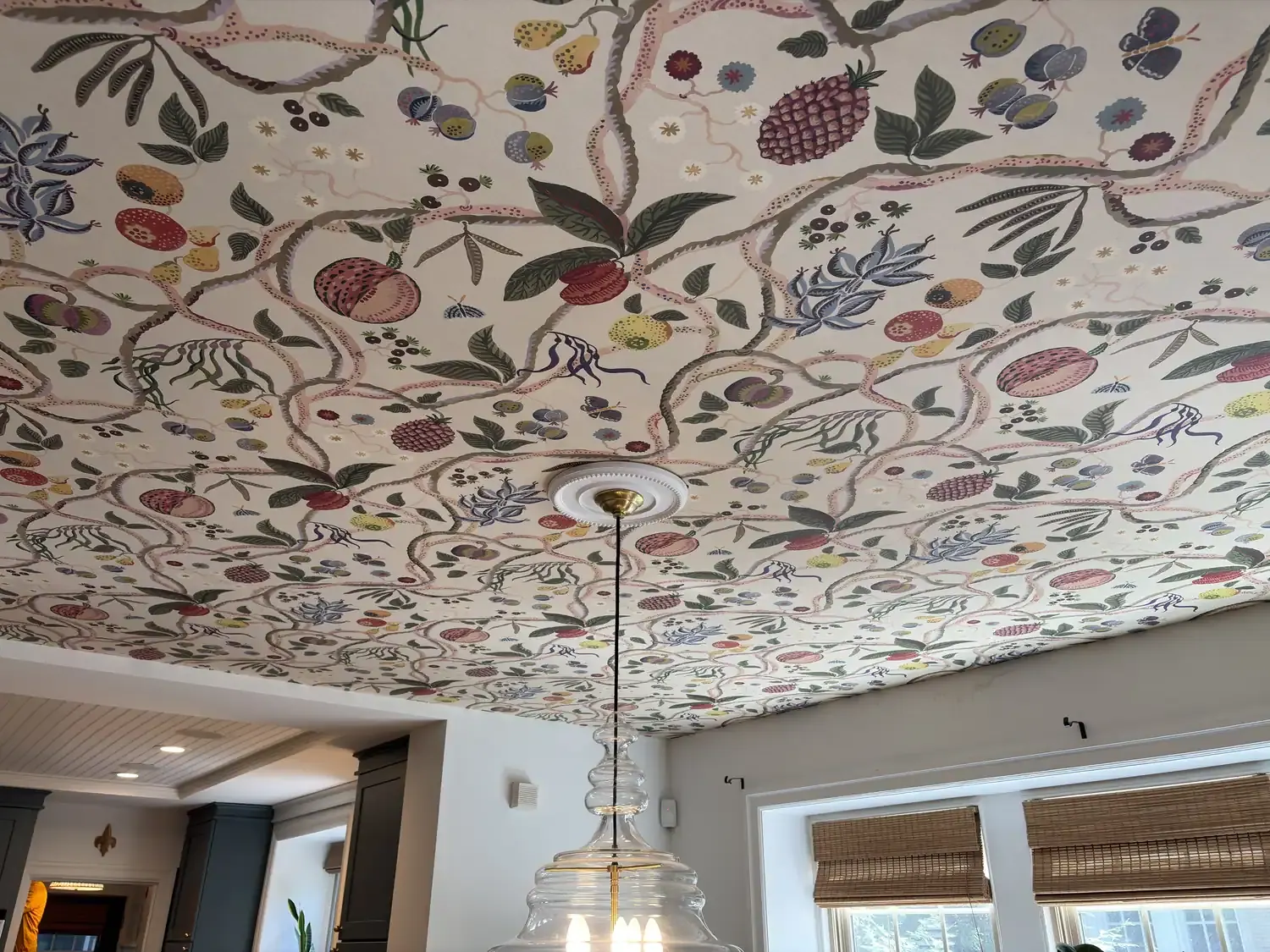
Wallpaper Installation in Delaware County, Hung Seam by Seam
Grasscloth, murals, powder rooms and ceilings, installed by someone who hangs paper for a living. Serving Delaware County, the Main Line, Chester County and Philadelphia.

What we hang
Grasscloth & fiber-faced papers
Woven fiber on a paper backing. We plan the whole wall before the first piece goes up, because grasscloth will show you every decision you made.
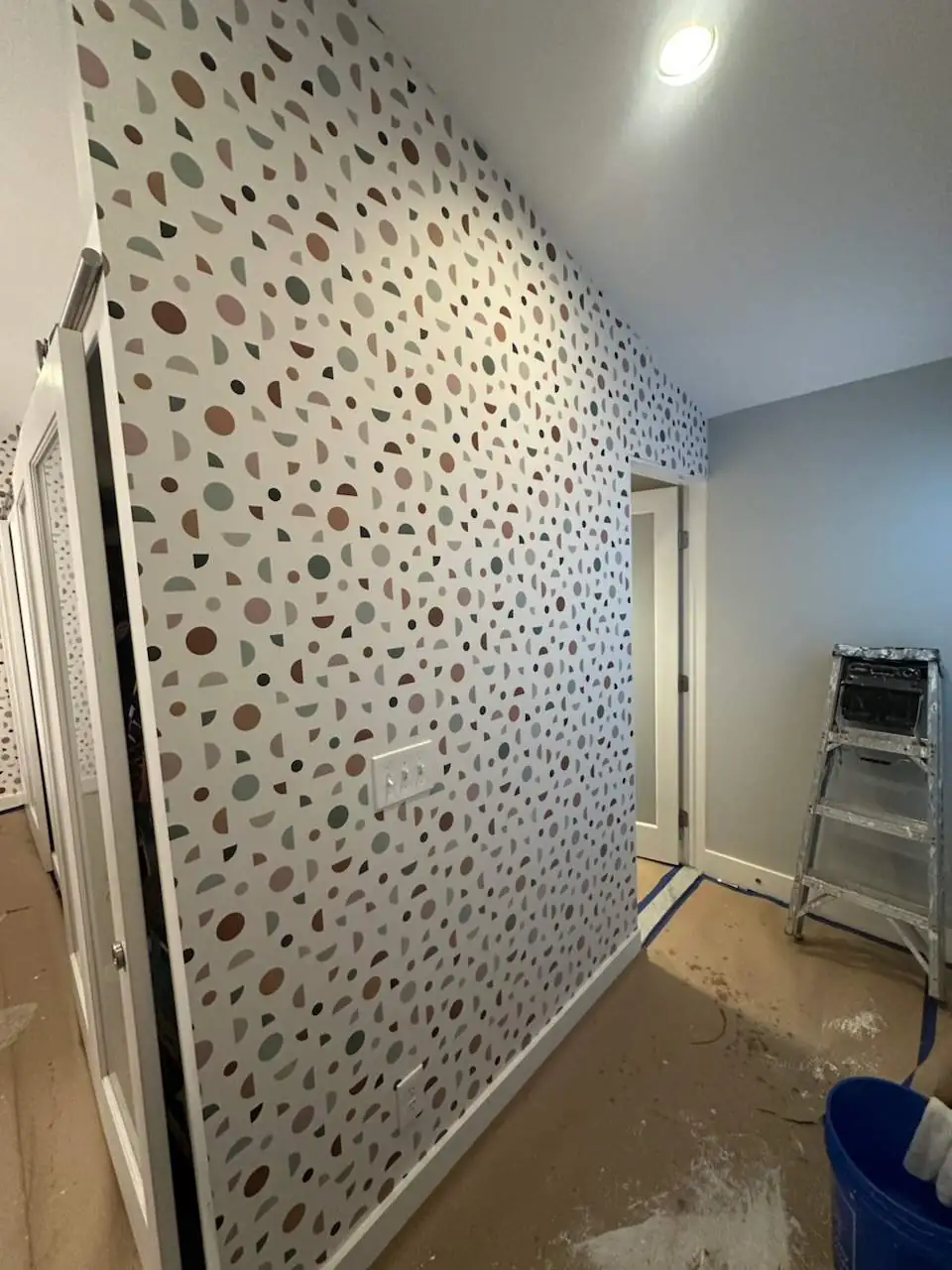
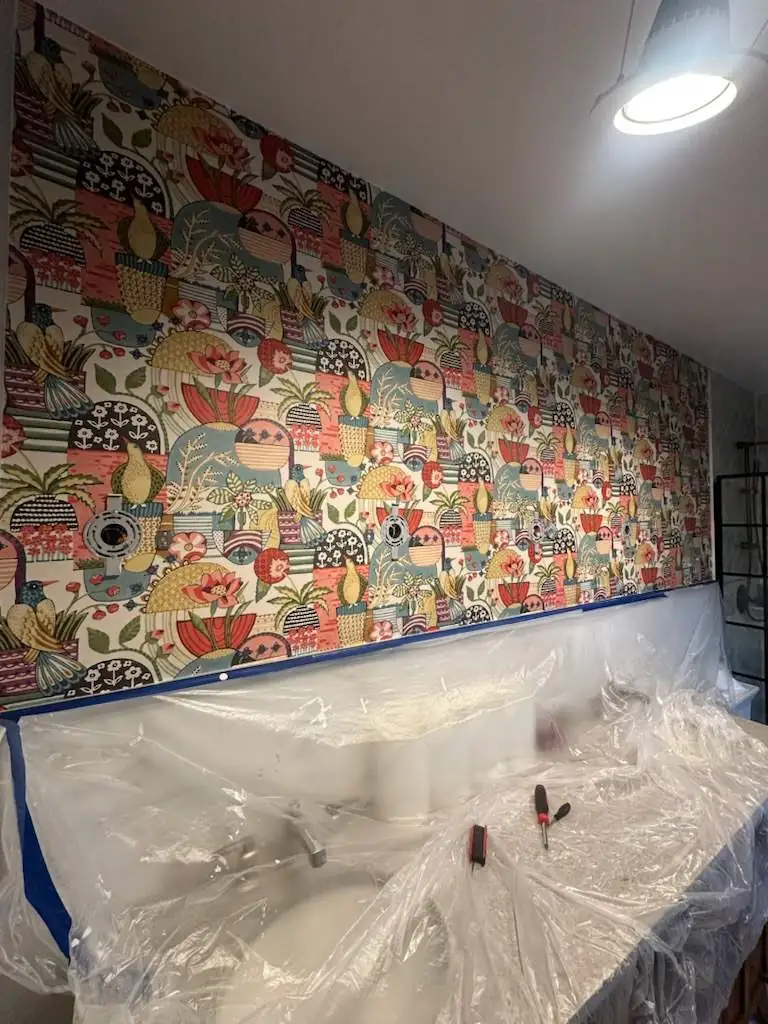
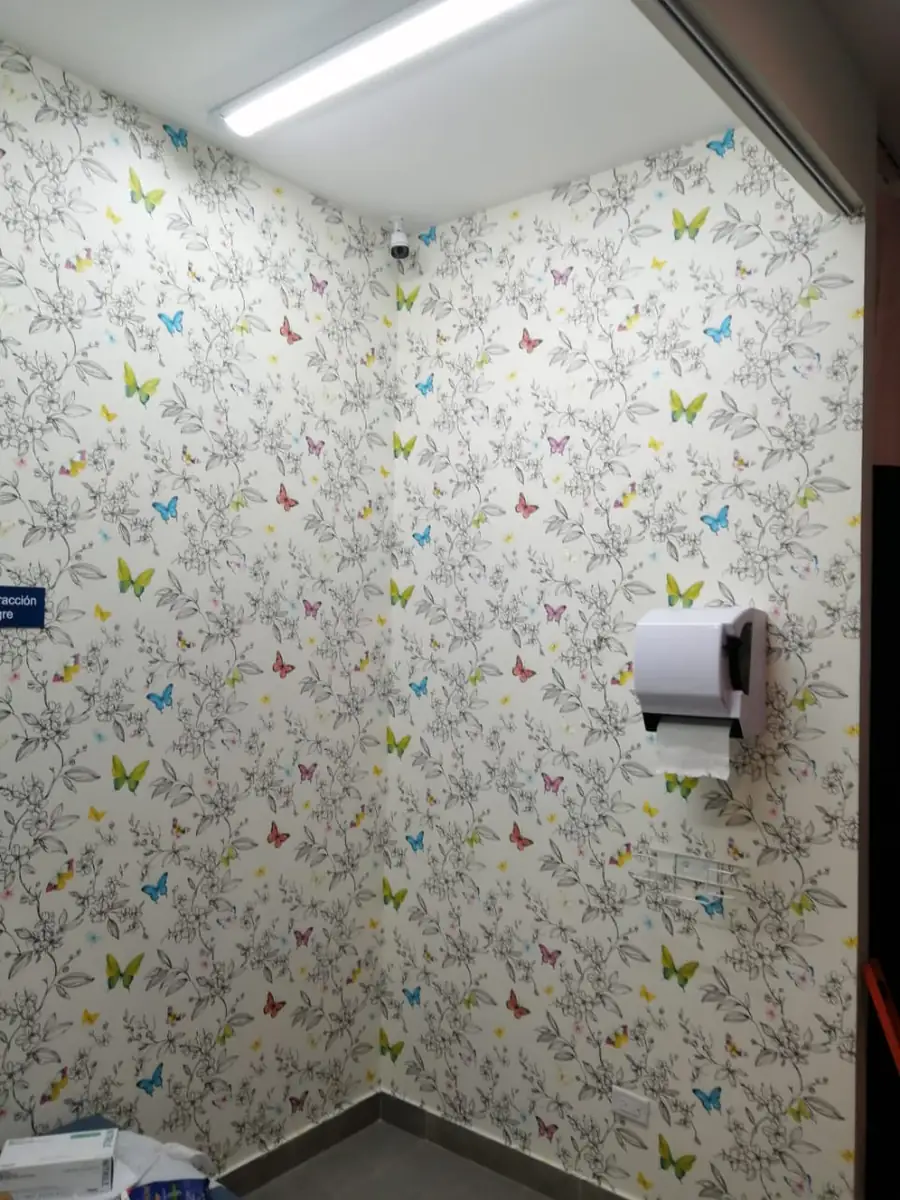
Patterned papers that have to match
Some papers butt edge to edge. Others have to be overlapped so the pattern lines up, then cut through both layers. The second kind takes us a lot longer, and it costs more.
Smooth & plain papers
These are the hardest ones to make look perfect. On a plain wall there is nothing going on to distract your eye from a seam, so we usually steer people toward a heavier stock.
Vinyl & heavy goods
Thick and durable, and it hides a wall that is not perfect. It also comes off easily years later, as long as somebody primed the wall first.
Ceilings
The hardest surface in the house to paper. No ceiling is level, so the layout has to absorb the slope and still look straight when you are standing under it.
Powder rooms
This is the room people around here most want papered. It is also the room that takes us a full day: cuts around the light, the vanity, a mirror that will not come off the wall, and the toilet.
How the job goes
We look at the wall first
Texture, old paper, glossy paint and bare new drywall are four different jobs with four different prices. We settle that at the estimate, before anybody orders paper, so the number we give you is the number.
We scrape it flat and prime it
We take a knife to every lump on the wall, patch what needs patching, and prime the whole surface. Primer is what makes the paper stick evenly, and it is also what lets somebody take it off in fifteen years without pulling the face off your drywall.
We measure the wall and the paper
We measure up to the highest point of the wall, because that is the measurement that has to reach. We also count the rolls before we start. If there is not enough paper to finish the room, you hear that from us before we hang anything, not halfway through.
We snap a level line
Nothing goes on the wall until we have a line to hang to. Your ceiling is not level and your walls are not plumb, so without that line the first piece looks fine, the second one picks up the error, and by the end of the wall the paper is crooked and it does not reach.
We take the plates off, then hang it
Outlet and switch covers come off the wall so the paper tucks in behind them. When the covers go back on, every cut edge is hidden underneath. It takes a minute and you can see the difference from across the room.
We walk the room with you
We look at it together in the light you live in, not under a work light, and we clean up after ourselves.

You buy the paper. We do the rest.
We do not sell wallpaper, and we do not mark it up. You pick your paper and order it yourself, which means you deal directly with the line you want and you keep the receipt.
Everything else is on us. Primer, adhesive, tools, protection for your floors and furniture, the prep, the install and the cleanup are all in our price. We just need the paper on site.
Before you order anything, we come out and measure. We tell you exactly how many rolls the room takes, including the extra that a pattern repeat eats up, so you are not guessing off a website calculator.
Where our customers buy their paper
The five mistakes we see most
We get called in to fix other people's wallpaper often enough that we have a list. Here it is, worst first.
- Hanging paper without priming the wallThis is the one that does real damage, and we run into it constantly on removals. The glue bonds straight to the drywall, so years later the paper takes the drywall with it.
- Cutting a piece before measuringIf you cut it short it is scrap, and on a lot of designer papers there is no second roll to go get.
- Not prepping the wallWhatever bump you leave on that wall is going to show through the paper, and you will not see it until the room is done.
- Not counting the paper before startingRunning out in the middle is a conversation you want to have with the homeowner beforehand, so they can decide whether to wait or start now and finish when the rest comes in.
- Leaving the outlet and switch covers onIf you cut around a cover plate you get an edge you can see and feel. It takes a minute to unscrew it.
Rooms we have papered
11 rooms, 11 different papers, all our own work. Tap any of them to watch.
Scroll for more rooms
A closer look at the work
Seams, corners, sconces and beams. The places where a bad hang shows first.



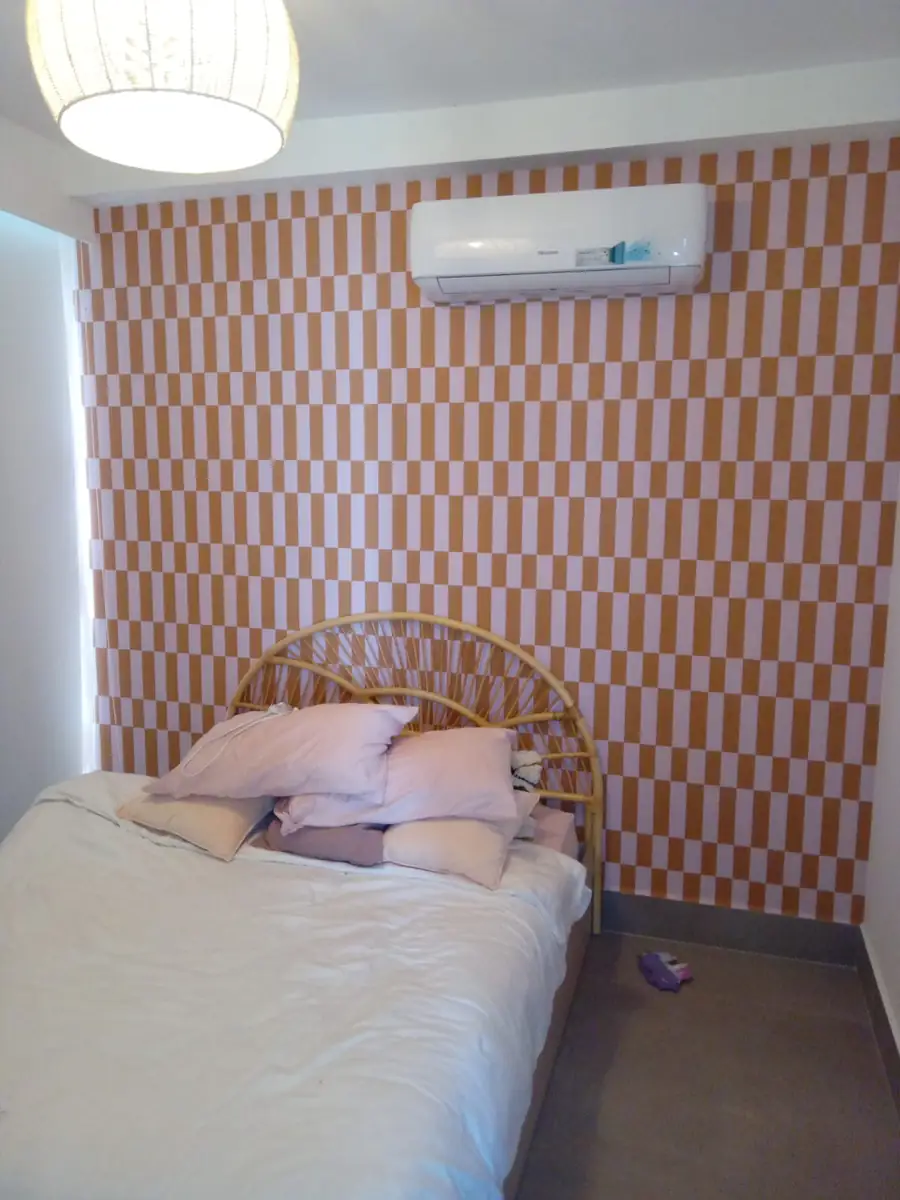
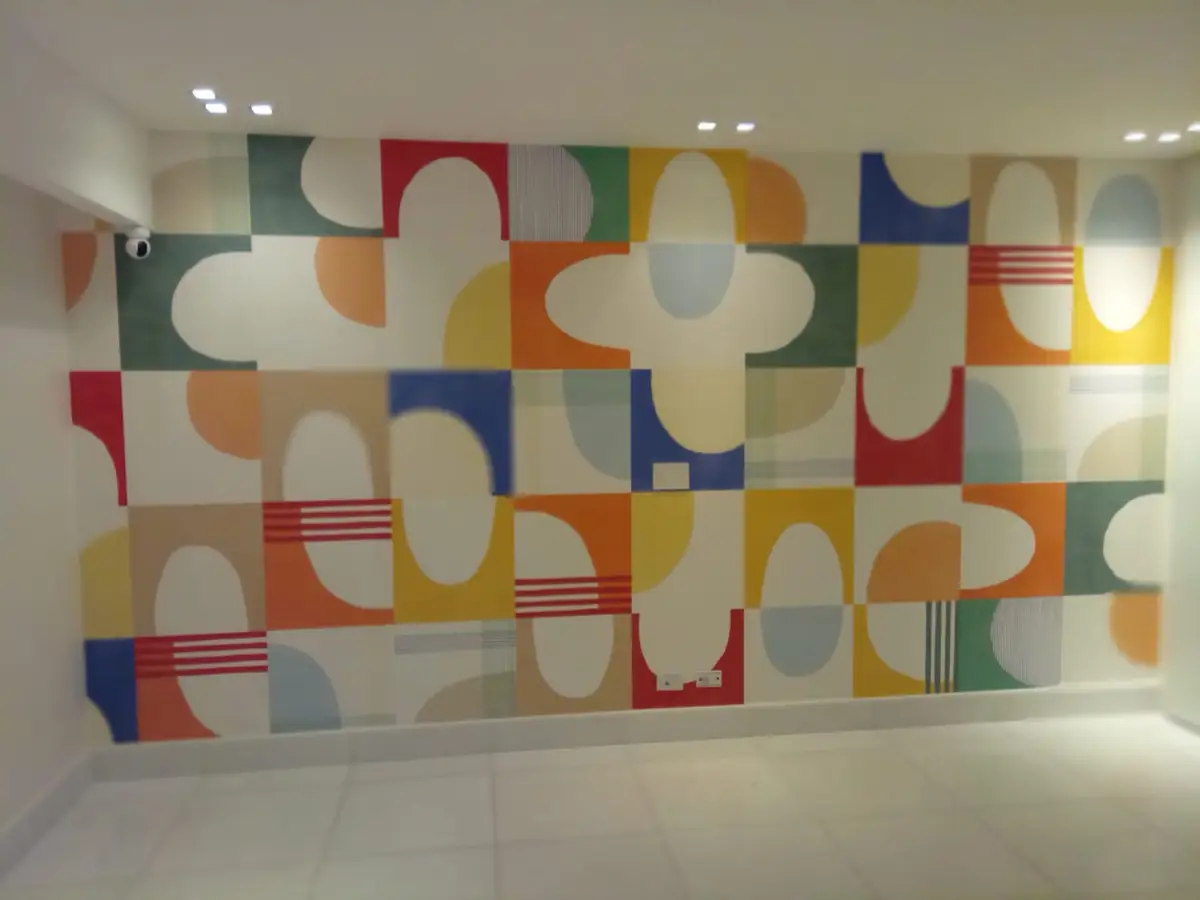
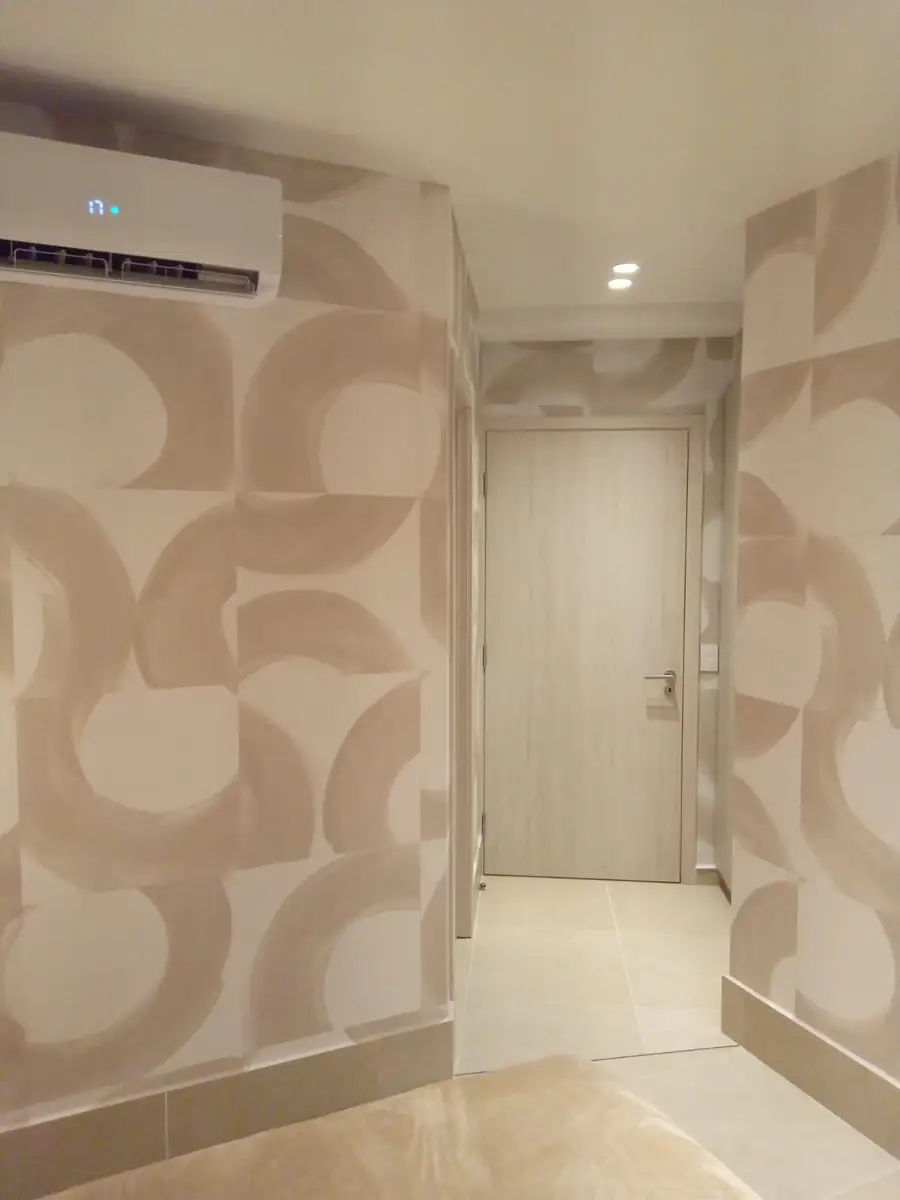
Wallpaper jobs, start to finish
Full write-ups of houses where wallpaper was part of the work, with the problem we walked into and what we did about it.

Three Levels of Scaffolding in a Custom Brookhaven, PA Home
Francy and her husband built this Brookhaven house themselves and have lived in it for close to forty years. The living room runs two stories to...

Wallpaper, a Textured Ceiling and Crown Molding in Brookhaven, PA
Joe and Debbie had just fired a large renovation company partway through a kitchen project. They called us for the living room, the stairwell and...

Painting a Brand-New Construction Home in Wilmington, DE
Past customers moving into a brand-new construction home in the Wilmington, DE area asked us to replace the builder's single coat of flat white...

Bathroom & Master Bedroom Painting in Malvern, PA
A repeat client deep in a renovation called us in after firing a sloppy painter, and we delivered a flawless bathroom and master bedroom on a...

An 11-Day Whole-Home Transformation in Wallingford
A thoughtfully timed refresh helped this Wallingford homeowner turn a long-overdue paint project into a meaningful new chapter for her space.

Interior Painting- Gladwyne, PA
A full interior refresh completed on a tight schedule without compromising quality.
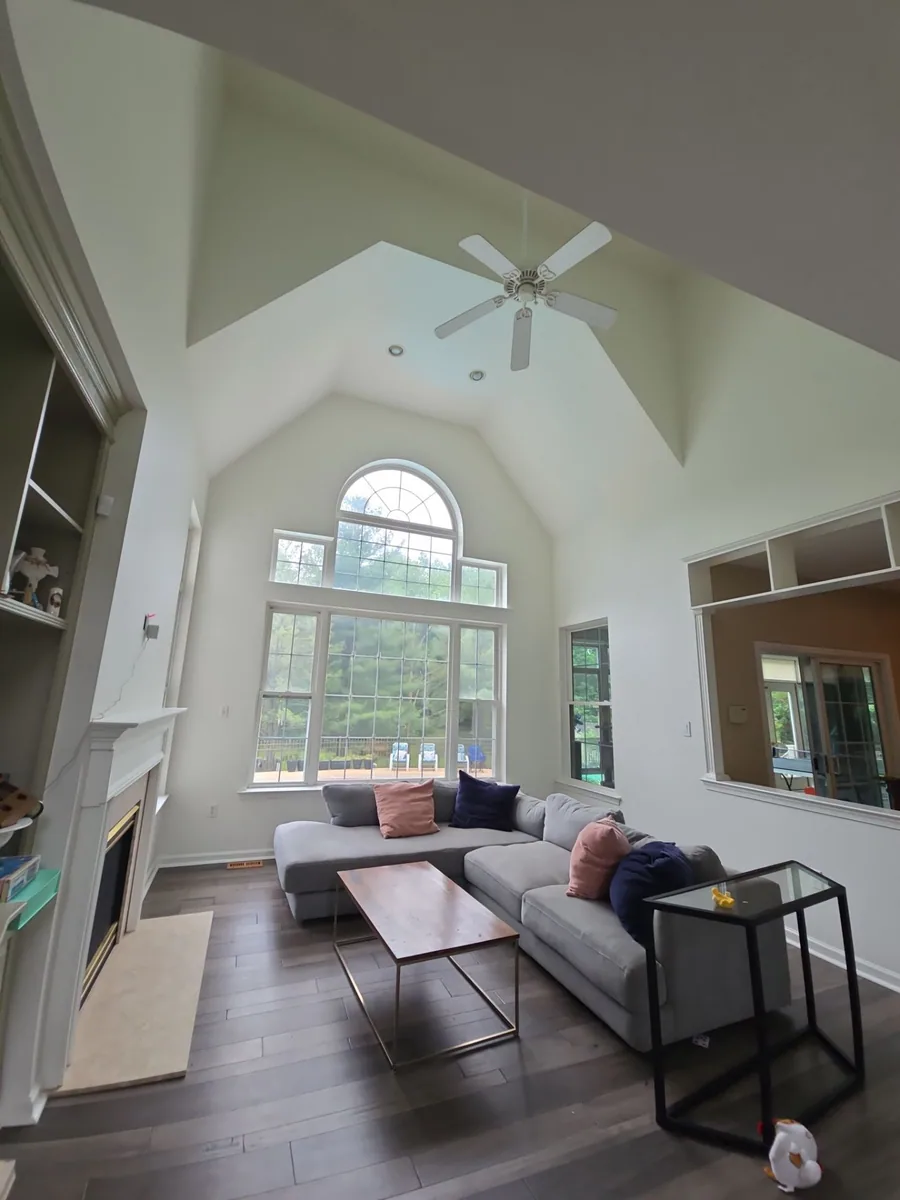
From Popcorn Ceilings to Crown Molding, Garnet Valley
When a home needs both skilled finish carpentry and detailed interior painting, the right team can completely transform the feel of the space.

Interior Painting- Havertown, PA
A stairwell and hallway refresh turned into a full interior upgrade with careful prep, new crown molding, and high-quality paintwork.
What homeowners say about our work
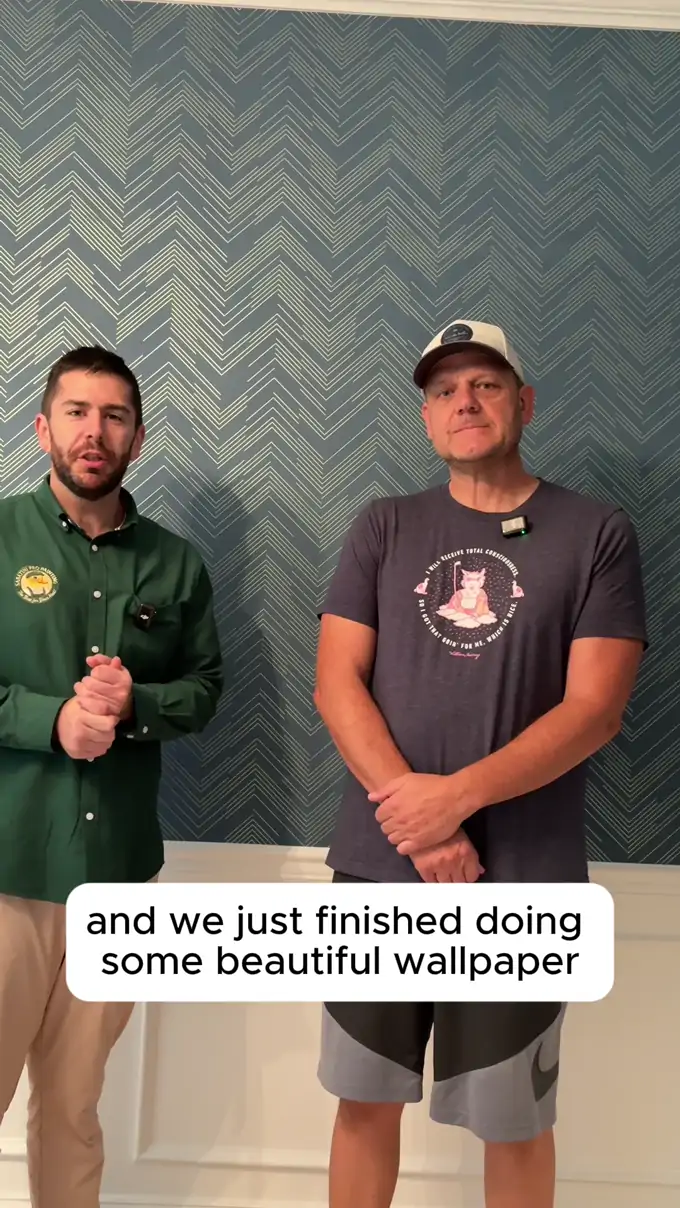
Patterned wallpaper and painting, Blue Bell, Montgomery County
Read the transcript
Q: What was your favorite part about working with us? A: The best part about working with you was that your guys were here on time. They showed us what went on at the end of every day. The main part about it was that they also explained all that they did that day, and then they came back the next day right away. Q: What was different about working with us? A: Anything at all that came up that was an issue, they let us know about it right then and there. They also made sure they came back the very next day. The hard part with other people is you do not know if they are going to come back. They explained everything, went through everything, and then at the end of each day they cleaned up. It was perfect the way it looked. Q: What would you tell family or friends considering our services? A: I would tell them feel free to use you at any time. We did something a little different here with wallpaper and paint. They explained how they were going to do the wallpaper, lining things up as you see with the wallpaper here. It has got a lot of different kinds of patterns to it. You really have to match it up, and they did an awesome job with it.
"We used Sabatini Painting to hang wallpaper in our hallway and dining room as well as to paint both rooms. Rick and the crew did an outstanding job."
"The entire interior of our home was painted by Sabatini, and the results were outstanding."
"Great company with a professional crew. Choose Sabatini to make sure your project is done right the first time."
"Great price, accurate estimate, timely and quality work. Would use them again."
"Excellent job painting our garage. Virgilio and Josefina were great to work with."
"They painted the ceilings in our living room, foyer and kitchen, plus the exterior posts. Clean, careful work."
"A fantastic experience from start to finish. Incredibly responsive and provided a fair estimate."
Wallpaper Removal
Most of the wallpaper we touch is coming off, not going up. If the paper in your house has to go before you paint, that is a separate page and a separate conversation.
Questions we get asked

Can I just paint over my wallpaper?
We do not recommend it. Paint is water based and it does not grab paper the way it grabs a wall, so it bubbles on you. Take the paper off, prep the wall, then paint. If you have decided you are painting over it anyway, it has to be primed and skim coated first, and you are still gambling on what that wall does a year from now.
We just bought a house and somebody already painted over the wallpaper. What now?
It comes down to whether the paper underneath is still stuck. If the wall is painted and the paper below it is not lifting anywhere, we can usually work with it, and a lot of the time we can hang new paper right over it. If it is lifting, it has to come off, and whatever we find behind it decides the rest of the job.
Why does one room cost more than another room the same size?
Cuts. A smooth open wall goes fast. A room full of windows, doors and trim is one cut after another, and every cut is time. The paper matters just as much. A pattern we have to overlap, line up and cut through takes far longer than one that butts edge to edge. We price wallpaper by how long the room actually takes, not by square footage.
Can I put wallpaper in my bathroom?
In a powder room with no shower, absolutely, and it is the most popular room in the house around here to paper. What decides it is moisture, not what the room is called. Wallpaper glue is water based, and a wall that stays cool and damp behind the paper is where mold starts. That black or yellow staining you sometimes see coming through old paper is exactly that. So a bathroom with a fan that actually gets used, and paper kept off the wet walls by the shower, is fine with us. A shower with no real ventilation is one we will talk you out of, and we would rather do that at the estimate than a year later.
What about peel and stick wallpaper?
It gets sold to homeowners as the easy option and on a wall it is the opposite. The material is thin and it tears. The backing lets go unevenly, so some spots have glue on them and some do not, and the glue that is exposed dries out in the air before it hits the wall. That is where the bubbles come from. And if the piece folds over and touches itself, it is done, you cannot pull it apart again without wrecking it. On glass it works well. On walls we will not use it.
My walls are textured. Can you paper over the texture?
No. Every bump comes through the paper. The texture has to go first, which means two or three coats of compound until it is gone, sanded flat, primed, and then papered. That is real work and it belongs in the estimate up front, not as a surprise once we are in the house.
Will wallpaper hide my bad walls?
A thick paper hides more than people expect. A thin paper hides nothing and will actually point out every flaw you have. When we are hanging something thin we patch the bigger problems first.
Will the seams show?
On a patterned paper, almost never. On a smooth plain paper you might catch one in certain light, and that is normal rather than a defect. It is paper butted up against paper, and on a plain wall there is nothing else going on to hold your eye. A heavier stock hides it better.
How can I tell whether a wallpaper installer knows what they are doing?
Watch the first hour. Somebody who knows the work scrapes the wall flat, primes it, measures both the wall and the paper to make sure there is enough to finish, and snaps a level line before anything goes up. The level line is the one to watch for. Ceilings are never level and walls are never plumb, so without that line the first piece looks fine, the second one picks up the error, and by the far wall the paper is visibly crooked and comes up short. That is the job where the guy packs up and stops returning calls.
How long does it take to remove old wallpaper?
Usually up to a day for a room, and it comes off in pieces, not in one satisfying pull. A glue remover helps sometimes. Thick paper or vinyl over a primed wall can come off in whole sheets. Thin paper, or anything hung straight onto bare drywall, is the slow one.
Why is some old wallpaper so much harder to get off?
Primer. If whoever hung it primed the wall first, the paper releases from the primer and your drywall is fine. If they went straight onto bare drywall, the glue bonded to the paper face of the drywall itself, so pulling the wallpaper tears that face and the gypsum behind it and leaves holes. Then the wall needs patching, compound, sanding and priming before anything new goes up. We see this most in newer construction.
Is a powder room a small job?
It looks like one and it almost never is. There is a cut around the light, the vanity, the mirror, which half the time is built in and not coming off, and the toilet, which you have to paper behind by hand and finish sitting on the floor. The ladder will not fit next to the door, and to reach the wall behind the door you have to close it, which can mean working with the light blocked. An empty powder room is three or four hours. A furnished one is a day. When we can, we pull the toilet and the whole thing goes better.
Do you paper ceilings?
Yes, and it is the hardest surface in the house to do. Ceilings are rarely flat or level, so the layout has to take up the slope and still read straight when you are standing under it looking up.
What does wallpaper installation cost?
We price it by the room, because the condition of the wall and the paper you picked drive almost all of the labor. A patterned grasscloth in a cut up powder room and a plain paper on one open wall are not the same job. We look at the space, tell you what the prep actually takes, and put the price in writing before we start.
How many extra rolls should I order?
At least one, and we will tell you the number when we measure. Paper gets discontinued constantly, and dye lots change even when a pattern stays in the catalogue. If a pipe leaks behind that wall in eight years, or somebody puts a chair through it, having a spare roll in the attic is the difference between patching the wall and repapering the whole room. It is the cheapest insurance in the job.
Do you supply the wallpaper?
No, and we do not mark it up either. You buy your own paper, so you deal directly with the line you want and you keep the receipt. We supply everything else: primer, adhesive, tools, floor and furniture protection, the prep, the install and the cleanup. We also measure the room first and tell you how many rolls to order, including what the pattern repeat is going to eat, so you are not guessing off a website calculator.
Do you offer free estimates?
Always. We walk the room with you and send you a clear, detailed proposal at no cost.
Where we work
We install wallpaper throughout Delaware County, the Main Line, Chester County and Philadelphia. Every color below is a town we have actually worked in, sized by how much we have done there since 2020.
Request your free wallpaper estimate
Tell us the room and the paper you have in mind. You get a clear written price, gone through with you in person.
Have a paper picked out already?
Send us the room and the product and we will tell you what it takes to hang it right, and what it costs, before you order a single roll.