Sabatini Pro Painting610-810-5040Free Estimate
Crown molding being installed along a ceiling line in a Delaware County home
Delaware County, the Main Line and Chester County

Carpentry and Trim, Installed and Then Painted

Crown molding, wainscot, mantels and rotted wood put right. The same company that hangs the trim is the one that caulks it, fills it and finishes it.

  • 231 Google reviews
  • 4.9 average rating
  • 756 projects since 2020
  • Licensed and insured
  • Good Contractors List
Why one company

Trim that is installed well and finished badly still looks bad

Most trim jobs pass through two companies. A carpenter installs it and leaves, then months later a painter turns up and inherits whatever gaps, nail holes and joints were left behind. We do both parts, so nobody gets to blame the other trade for the seam you are looking at.

Scope

What we build

Crown molding

Standard colonial profiles or a built up design with two or more pieces. Paint grade or stain grade.

Chair rail and wainscot

The full height of a dining room or hallway, capped and returned properly into the corners.

Board and batten

Laid out so the battens land evenly on the wall instead of wherever the math happened to leave them.

Baseboard and casing

New runs, or replacing what is there when it has been painted shut and gouged over thirty years.

Fireplace mantels

Built and fitted to the opening, then finished to match the rest of the room.

Built-ins and floating shelves

Shelving and cabinetry built into an alcove so it reads as part of the house.

Rot and wood repair

Cutting out failed exterior wood, headers, sills and trim, and replacing it before anything gets painted.

Crown molding

What we have learned putting crown on ceilings

Crown is the one people ask about most, so here is the whole thing: what to buy, what size, and the part that decides whether it still looks good in five years.

Why people put it up

Crown molding improves the look and the feel of a room. On plaster walls it does something else as well: it covers imperfections in the corners where the ceiling meets the wall, permanently and cost effectively. Those repairs can get expensive on their own.
Where the material comes from

Here in southeastern PA we generally buy standard crown profiles from a local lumber yard, Lowe's, Home Depot or Tague Lumber. For specialty crown we order from Garden State Lumber and have the material special ordered.

What size goes on your ceiling

Most crown installed these days is 3 5/8 colonial, run in one piece, with the detail facing down and the flat side to the ceiling. That is what you will see in most homes around here with 8 foot ceilings. Where ceilings are 9 foot or taller, and especially in a two story foyer, 4 5/8 colonial is usually the right call.

Built up crown, and what a step means

Larger Victorian homes often have extra steps in the design. When a carpenter talks about steps, they mean a built up crown: two or more pieces of trim stacked to create a more detailed profile. The more pieces involved, the more intricate and elegant it gets, and the more labor and material the job takes.

How we keep it from cracking

We glue the crown to the wall and the ceiling, and inside each of the connecting scarf joints. Wood swells and shrinks with the seasons and the humidity, and when there is a lot of moisture in the air the trim expands and the seams open up. Plenty of glue holds it in place and stops the cracking.

Cost

How crown molding gets priced

Crown is priced by the lineal foot, with material and labor counted separately. Here is how to get yourself a rough number before anybody comes out, so you have something to weigh estimates against.

  1. Measure the room and add up the lineal feet around the perimeter.
  2. Add 20 percent. You always need more crown than the room measures, because of the cut and waste factor.
  3. Multiply that by a per lineal foot rate for material and for labor.

A built up profile made of three pieces costs considerably more than a single run of colonial, because it is three times the material and a great deal more cutting. And the install is only part of it: the gap between wall and ceiling has to be caulked, the nail holes filled with putty, and the whole thing painted. Get your number in writing →

Wood repair

The part nobody sees until the paint comes off

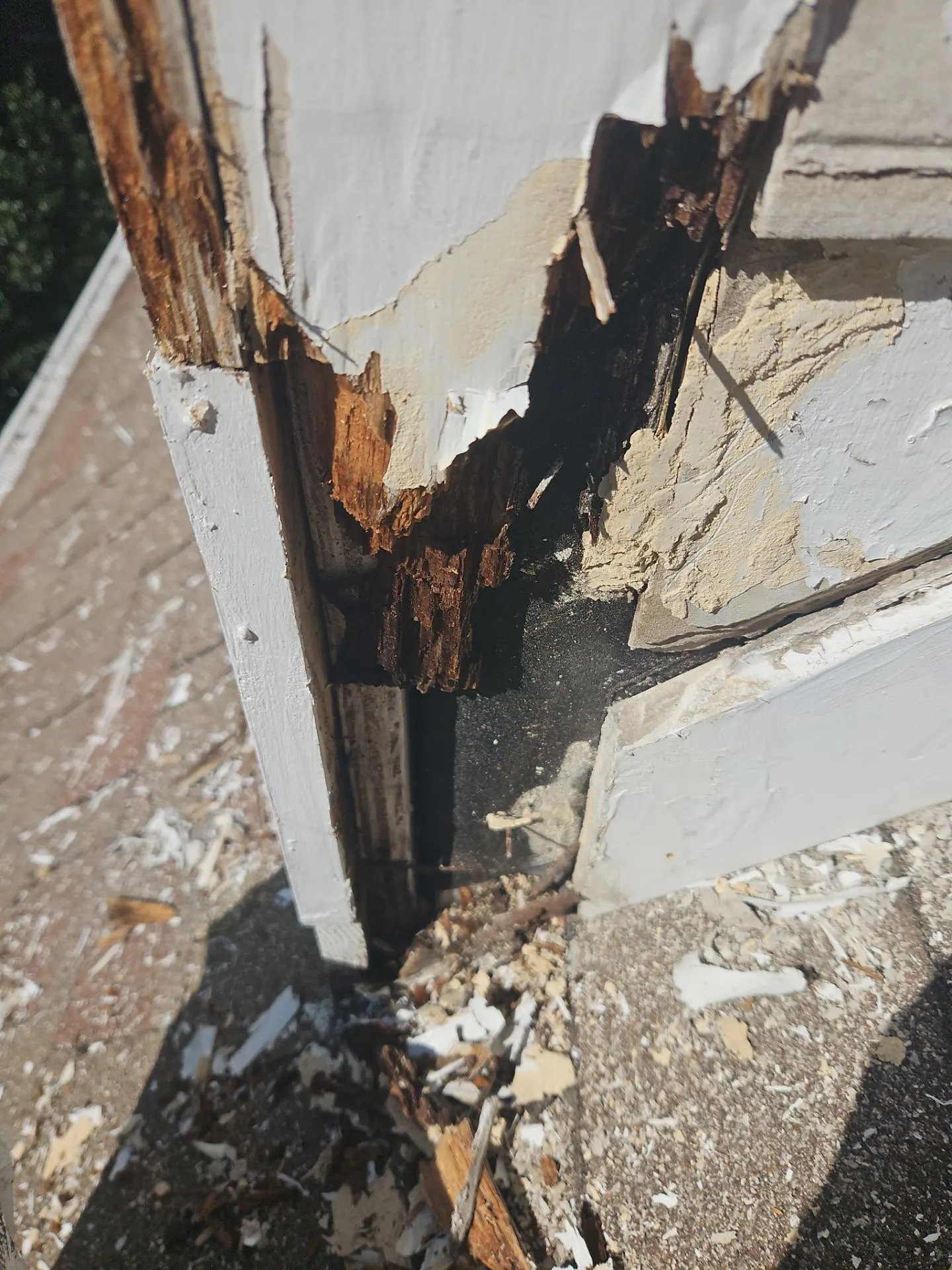
On an exterior, paint is often the only thing holding a piece of rotted trim together. We find it during prep, cut it out and replace it. Below is a header on a Bryn Mawr home that looked fine from the driveway.

Rotted exterior wood trim opened up, showing the damage hidden behind the paint
What was behind the paint
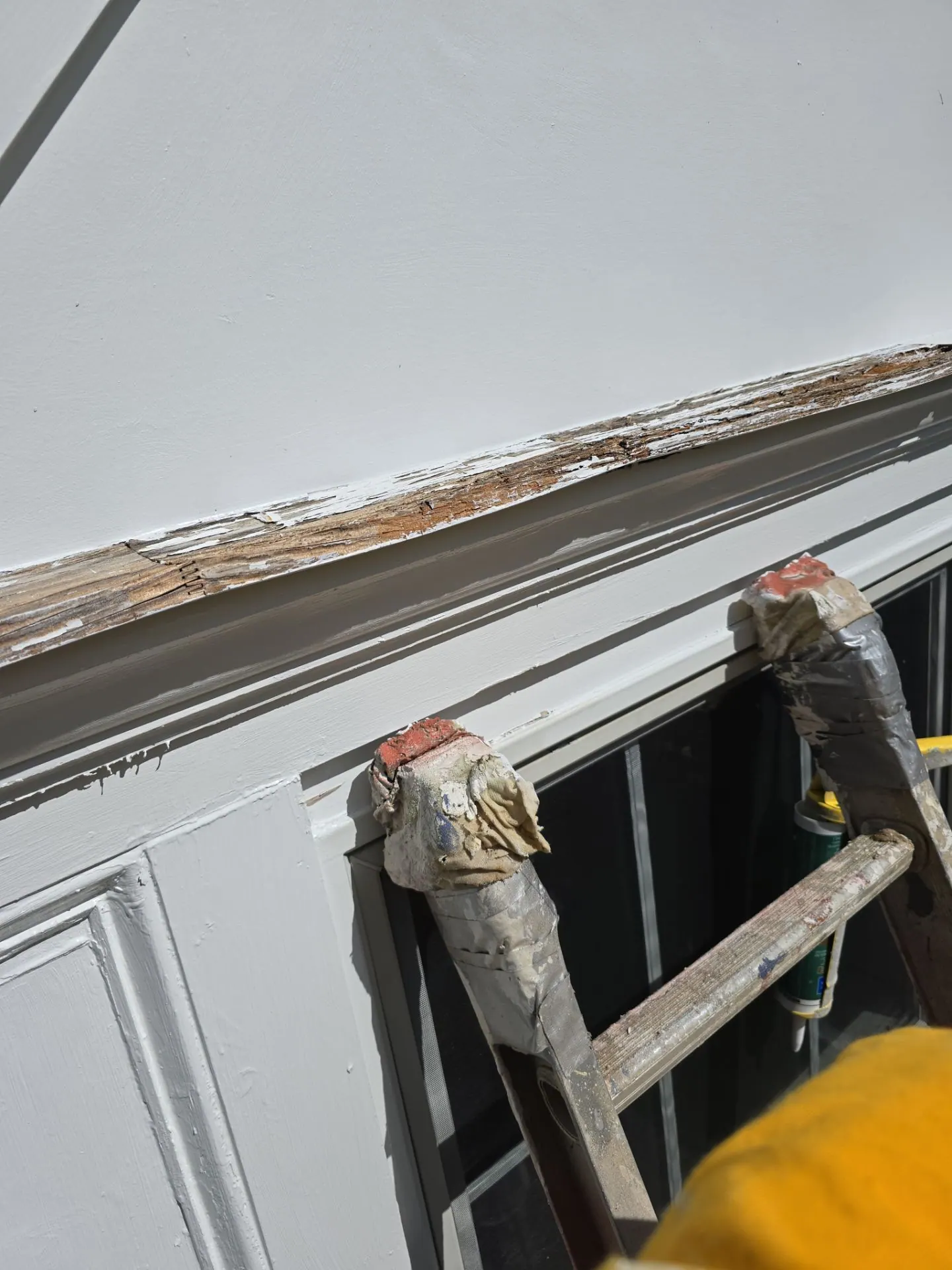
A rotted window header being cut out and replaced on a Bryn Mawr home
Cutting out a rotted header
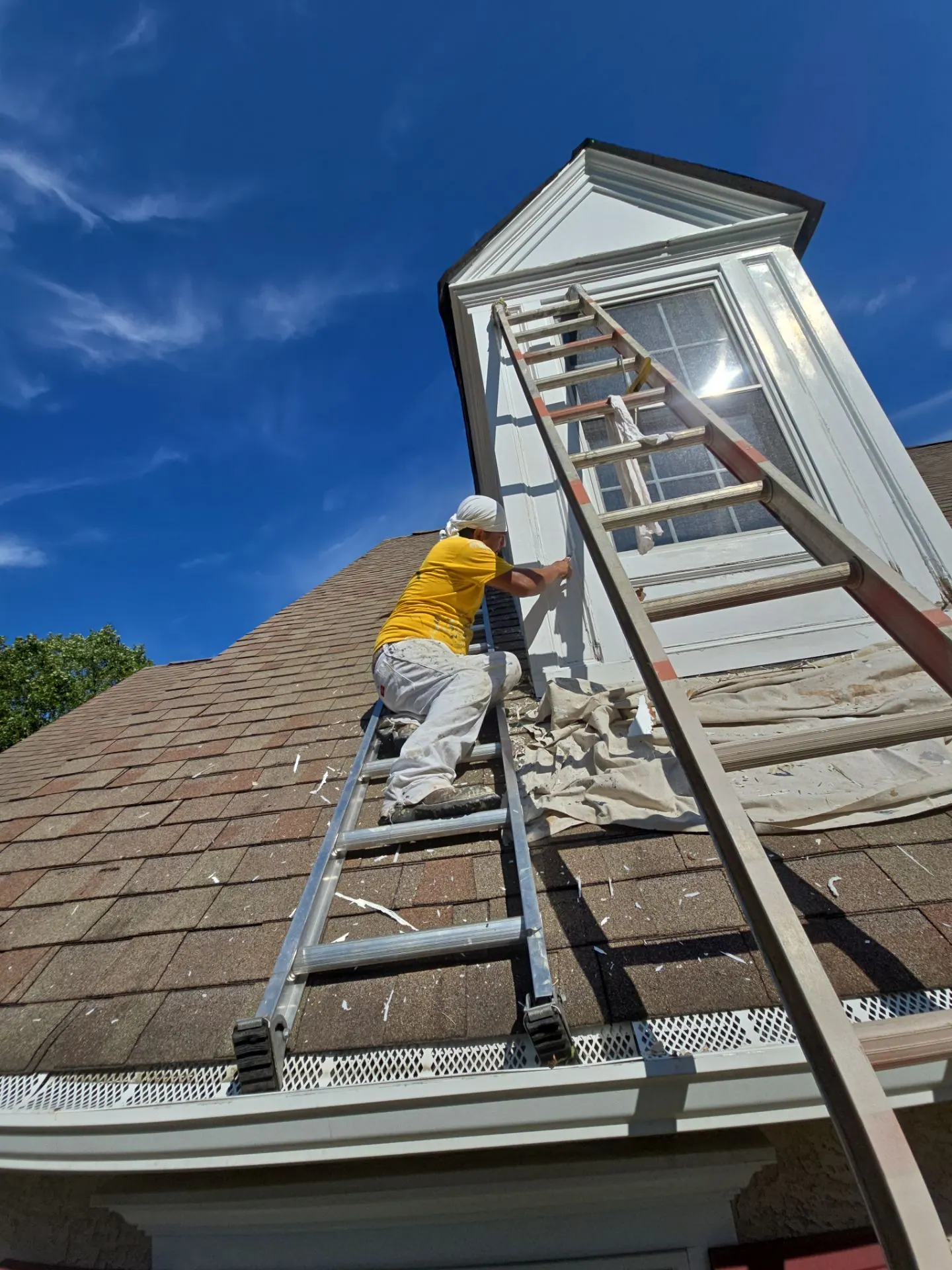
A painter on an extension ladder working at a second story roofline
Reaching the repair
Straight from your neighbors

What homeowners say

231Google reviews★★★★★

Every one of them left by a real customer in Delaware County or the surrounding area.

Good to know

Crown molding and trim questions

How do you keep crown molding from cracking at the joints?

We glue the crown to the wall and to the ceiling, and we glue inside every scarf joint where two pieces meet. Wood expands and contracts with the seasons and the humidity, and a joint that was only nailed will open up the first humid summer. Glue holds it closed.

What size crown molding should I use?

With 8 foot ceilings, 3 5/8 colonial run in one piece is the standard and it looks right in most homes around here. With 9 foot or taller ceilings, or a two story foyer, step up to 4 5/8. Bigger rooms with taller walls can carry a built up profile made from two or more pieces.

How is crown molding priced?

By the lineal foot, for material and labor separately, and the profile drives both. Measure the perimeter of the room, add 20 percent for cut and waste, and that is the number everything gets multiplied against. A built up crown made of three pieces costs considerably more than a single piece of colonial, because it is three times the material and far more cutting. We will measure and put your number in writing.

Should I just hire a handyman for this?

If they have references and plenty of photos of their own crown work, go ahead. Do not take somebody's word for it. Crown installation is more complicated than it looks, and an installer without real experience is unlikely to leave you something that still looks good in five years. Poor installation and finishing leaves an expensive piece of wood hanging off your ceiling. Ask for the photos before you hire anybody, including us.

Do you paint the trim after you install it?

Yes, and that is the point of hiring one company for both. The gaps between the wall and the ceiling get caulked, the nail holes get filled with putty, and then it gets painted. Trim that is installed well and finished badly still looks bad.

Can you match existing trim in an older house?

Usually. Standard profiles we can buy locally. For anything unusual we order specialty material special order, which adds lead time to the schedule but gets the profile right instead of close.

Request your free carpentry estimate

Tell us the rooms and what you are picturing. We will come out, measure the lineal feet, and put the price in writing.

Send a photo of your kitchen if you have one handy. A real person will get back to you.

Rather just talk it through?

Call and a real person picks up. Tell us what you want built and we will come out and measure.

Get Your Free Estimate 📞 (610) 810-5040