 Sabatini
Plaster Repair in Delaware County
Cracked, hollow and water damaged plaster repaired properly and repainted, rather than skimmed over so it reopens next season.
What we repair
Settled cracks that keep coming back
The crack over a doorway or running off a window corner that gets filled every few years and reopens every few years. Filling it without dealing with the joint underneath is why it returns.
Hollow and bulging walls
Plaster grips the lath behind it. When that grip lets go the surface sounds hollow when you tap it and may push out slightly. Paint over that and the wall is still loose underneath.
Water damage from a leak above
Once the leak itself is fixed, stained and soft plaster gets cut out rather than painted over, and the stain gets blocked so it does not bleed back through the new paint.
Repairs that were skimmed over
A crack filled with compound and nothing else, or a patch that was never sanded flat. These usually get taken back further than people expect.
Damage left by wallpaper removal
Older walls were often papered straight onto the plaster. Taking the paper off can bring the finish coat with it, which is a plaster job before it is a painting job.
Walls past patching
When a surface has enough history that patching it one spot at a time would read as a map of repairs, the answer is resurfacing the whole wall instead.
How plaster works, and why it fails
- Plaster is not drywall, and it does not fail like drywallA plaster wall is three things: strips of lath fixed to the studs, a base coat pushed through the gaps between them, and a thin finish coat on top. The base coat squeezes through the lath and hardens into ridges behind the wall. Those ridges are what hold the whole surface up.
- A hollow sound means the grip has gone, not that the wall is dirtyWhen those ridges snap, the plaster is no longer anchored to anything. The surface can look perfect and still be loose. Tapping across a wall and listening for where the sound changes is how you find it.
- A crack is a symptom, so the question is what movedFine cracks across a ceiling usually mean age. A crack that runs on an angle from the corner of a door or window usually means the house settled and the opening moved with it. They are not the same repair, and treating them the same is why one of them keeps returning.
- Filler alone does not hold a moving jointCompound is rigid once it cures. Push it into a crack that still moves seasonally and it releases at the edges. The joint has to be opened up and reinforced before anything is filled.
- Old plaster and new paint do not automatically get alongOlder plaster and oil painted trim need the right primer or nothing sticks. This is the step that decides whether a repaint on an old house still looks right after a winter.
How we repair it
We come and look before we quote
Plaster hides its condition. What is visible on the surface and what is actually loose behind it are different sizes of job, and neither can be priced honestly over the phone.
We sound the wall first
Before anything is cut, we tap across the area to find where the plaster has let go. That is what sets the real edge of the repair, rather than the edge of the crack you can see.
Cause before cosmetics
If a stain is from a leak that is still active, repairing the plaster just hides it until it comes back. We will tell you when the roofer or the plumber goes first.
Cut back to sound plaster
Failed material comes out rather than getting bridged over. The repair is anchored to something solid, and the joint is reinforced so it is not left free to move.
Build it up in coats and sand it flat
Each coat goes on wider than the last and gets sanded between coats, so the repair blends over a couple of feet rather than a couple of inches. This step is most of the difference between a repair you can find and one you cannot.
Prime the repair, then paint the whole surface
Bare patching material absorbs differently than the wall around it, so it gets primed, and then the wall or ceiling gets coated corner to corner. Painting only the patch is what leaves a halo you notice in afternoon light.
Your crew leader walks it with you
Under the room's own lighting rather than a work light, before the job is called finished.
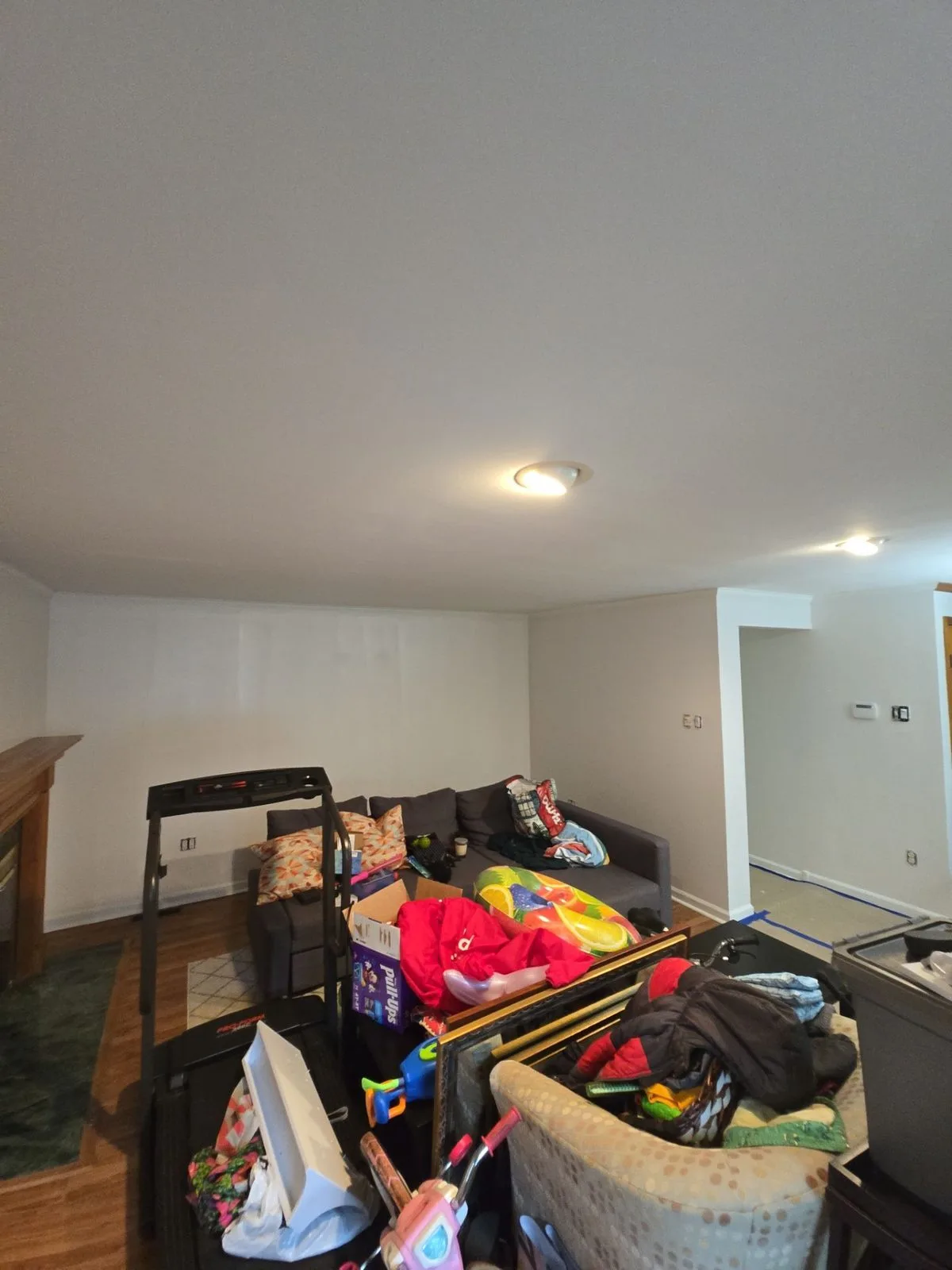
A Wallingford living room with a ceiling that needed repair before anything could be painted, with photographs from before, during and after: read the job story.
Questions we get asked about plaster
Can old plaster be repaired, or do the walls have to be replaced?
In most cases it is repaired. Plaster that has let go in places can be cut back and re-anchored, and the surface rebuilt to match the wall around it. Replacing sound plaster with drywall throws away a better wall than the one going up in its place, and it is a far bigger job than it looks.
Why does my plaster crack keep coming back?
Because it was filled rather than repaired. A crack that is only painted comes back. If the joint underneath still moves with the seasons, rigid filler lets go at the edges within a year or so. The joint has to be opened and reinforced first.
What does it mean when the wall sounds hollow?
It means the plaster is no longer gripping the lath behind it. The surface can look completely fine and still be loose. Painting it changes nothing, and the loose area usually spreads.
Is it worth repairing plaster, or should I just drywall over it?
That depends on how much of the wall has gone, which is what the visit is for. Plaster is thicker and harder than drywall, it holds sound better, and in an older house the walls and the trim were built to each other. Covering it changes the depth of every window and door opening in the room.
What is skim coating, and do I need it?
Skim coating means resurfacing a whole wall with a thin coat rather than patching it in spots. It is the answer when a surface has enough separate repairs and history that patching it piece by piece would read as a map of patches once the light hits it.
Can you repair the walls after wallpaper comes off?
Yes, and on older plaster it is often part of the same job. Paper was frequently hung straight onto the plaster, and removing it can pull the finish coat away with it.
Do you paint the repair as well?
Yes. The wall or ceiling gets coated corner to corner, because a repair that is spot painted is visible from across the room no matter how good the patching was.
How much does plaster repair cost?
It depends on how much of the surface has actually failed behind the part you can see, which is why we look at it first and then give you the price in writing. A single crack and a ceiling that has started to let go are different jobs.
Our house is from the 1920s. Is that a problem?
It is the opposite of a problem, it is just a different job. Older homes around here usually mean plaster, oil painted trim and settled walls, all of which need the right primer and real patching before finish paint.
Is the work covered by anything?
Every job we do carries a five-year workmanship warranty in writing at no extra cost. We are a registered Pennsylvania Home Improvement Contractor, PA HIC #PA124576, and we carry general liability and workers' compensation insurance.
Get your free estimate
We work across Delaware County, Chester County, the Main Line, Montgomery County, Philadelphia, Greater Wilmington DE and Gloucester County NJ. Tell us what the wall is doing and a real person will get right back to you.